

Browse prime Back Bay, MA homes and real estate options in the area.
Back Bay Housing Market Trends What is the housing market like in Back Bay today? In early 2026, Back Bay home prices were selling for a median price of $1.2M, with homes averaging 55 days on the market compared to 47 days the prior year. There were 68 homes sold in January, reflecting consistent demand for one of Boston's most iconic and internationally recognized neighborhoods. Back Bay generated over $690 million in total sales volume in 2025, a 7.3% increase from the prior year, underscoring its enduring appeal to high-net-worth buyers.
Median Sale Price
# of Homes Sold
Median Days on Market
Your Guide To
World-class urban neighborhood with Parisian elegance
Inspired by the grand boulevards of Paris and built on reclaimed land along the banks of the Charles River, Back Bay is Boston's most celebrated neighborhood — a masterclass in 19th-century urban planning that has evolved into one of the most vibrant and desirable addresses in the country. Its alphabetical grid of tree-lined avenues, flanked by stately Victorian brownstones and punctuated by landmark cultural institutions, creates a streetscape that is simultaneously historic and thoroughly alive.
From its earliest days as a refuge for Boston's wealthy elite, Back Bay has grown into an international destination anchored by world-class shopping along Newbury Street, the cultural grandeur of Copley Square, and a dining and nightlife scene that draws visitors from across New England. The Boston Public Library, the finish line of the Boston Marathon, and the sweeping views from the Prudential Center's Skywalk all call this neighborhood home. With a housing mix that spans beautifully preserved brownstone condominiums to record-setting luxury towers like One Dalton and the Raffles Residences, Back Bay offers urban living at its most refined — for those who want the very best that Boston has to offer.
Back Bay offers a compelling mix of meticulously preserved Victorian brownstones along its signature tree-lined streets and a growing collection of branded luxury towers that have introduced full-service, amenity-rich high-rise living to the neighborhood. Buyers can choose from single-family townhomes, brownstone condominiums, and ultra-luxury residences at buildings like One Dalton and the Raffles Residences, each catering to a different vision of what upscale urban living can look like.
Back Bay is one of Boston's most expensive neighborhoods, with a median sale price around $1.2 million. Renovated brownstone condominiums typically range from $800,000 to $3 million, while full-floor units in luxury towers and single-family townhouses can exceed $10 million, with a handful of ultra-prime properties trading at $20 million and above.
New construction in Back Bay takes the form of luxury high-rise residential towers rather than ground-up brownstone development, as the neighborhood's historic streetscape is largely preserved. Buildings like One Dalton and the Raffles Residences represent the newest additions to the market, offering contemporary finishes, concierge services, and city views at the top end of the price spectrum.
Brownstone homes along streets like Commonwealth Avenue and Marlborough Street typically feature bay windows, high ceilings, carved oak doors, private gardens or roof decks, and original architectural details alongside modern renovations. Luxury tower units prioritize panoramic city and river views, premium appliances, floor-to-ceiling glass, and building amenities including fitness centers, concierge, and valet parking.
Back Bay combines the architectural grandeur of one of the best-preserved 19th-century urban neighborhoods in the United States with direct access to world-class shopping on Newbury Street, the Prudential Center, major cultural institutions, and an express train to anywhere in the city. Its Paris-inspired street grid, Commonwealth Avenue Mall, and proximity to the Public Garden and Charles River Esplanade make it genuinely one of a kind.
Listings are available on platforms like Redfin, Compass, and Gibson Sotheby's, though the market can move quickly for well-positioned properties. Given the neighborhood's sub-market complexity — with meaningfully different price dynamics across Lower Back Bay, Upper Back Bay, and the High Spine tower corridor — local expertise is especially valuable.
Buyers should factor in the significant variation in pricing and character across Back Bay's distinct sub-neighborhoods, as well as the practical realities of urban Boston living — parking is scarce and expensive, and flood risk is elevated in some areas given Back Bay's origins as reclaimed tidal land. Those interested in the luxury tower segment should also study the resale history of specific buildings carefully, as pricing dynamics can vary substantially.
Back Bay has long been considered one of Boston's strongest long-term real estate investments, supported by its irreplaceable location, architectural protections that limit new supply, and persistent global demand from high-net-worth buyers. While individual building performance varies, the neighborhood's overall sales volume and pricing have remained resilient through broader market fluctuations.
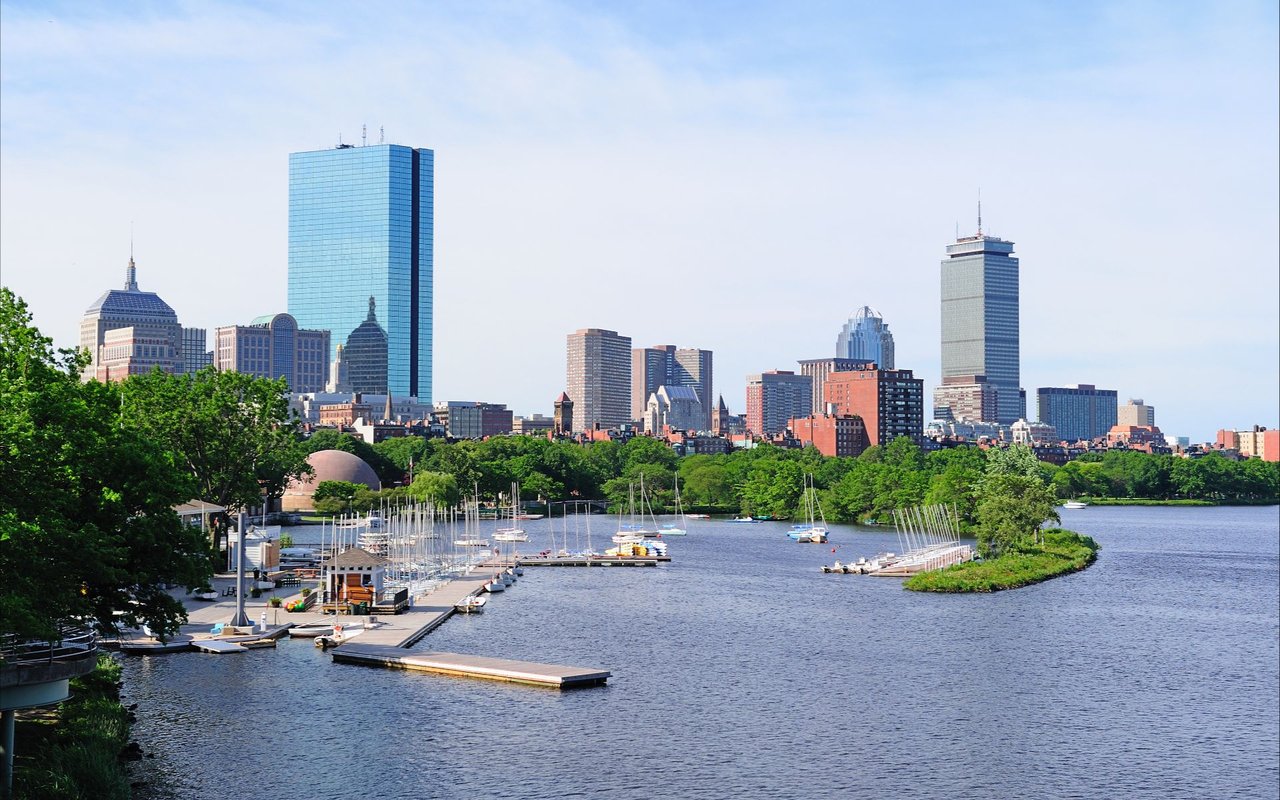
Back Bay's northern boundary runs along the Charles River, and properties on Beacon Street and along Commonwealth Avenue's upper stretches offer some of the most sought-after river views in the city. Residences on the upper floors of luxury towers like One Dalton offer panoramic views of the Charles, Boston Harbor, and the broader skyline, commanding some of the highest prices per square foot in New England.
Back Bay residents enjoy an extraordinary concentration of amenities, from Newbury Street's eight blocks of boutiques, galleries, and sidewalk cafes to the Prudential Center's 75 shops and restaurants and Copley Place's luxury retail. Cultural destinations include the Boston Public Library, Trinity Church, the Skywalk Observatory, and the Isabella Stewart Gardner Museum, while the Charles River Esplanade provides miles of waterfront parkland for running, cycling, and outdoor recreation.
Back Bay is a centrally located Boston neighborhood built on reclaimed land along the Charles River basin, bounded by the Public Garden to the east, the river to the north, and Fenway to the west. Its famously alphabetical street grid — Arlington, Berkeley, Clarendon, Dartmouth, Exeter, Fairfield, Gloucester, Hereford — was inspired by Haussmann's renovation of Paris and remains one of the most elegant planned streetscapes in America.
Back Bay draws a cosmopolitan mix of young professionals, established executives, international buyers, and Boston's cultural and academic elite, united by a shared appreciation for urban sophistication and architectural beauty. The neighborhood has a lively energy during the day and evening, with constant activity along Newbury Street and around Copley Square, while its residential side streets maintain a surprisingly quiet and neighborly character.
Back Bay's dining scene is among the best in Boston, with restaurants along Newbury Street and Boylston Street offering everything from acclaimed seafood bistros and upscale Italian to casual neighborhood cafes and celebrated French-inspired cuisine. The neighborhood is also home to major food hall destinations and the Copley Square Farmers Market, which twice weekly transforms the park into a gathering place for fresh local produce and artisan vendors.
Back Bay is served by Boston Public Schools, with access to some of the city's top-rated magnet programs including Boston Latin School and Fenway High School. The neighborhood's central location puts students and lifelong learners minutes from Boston University, the New England Conservatory, and numerous colleges and universities throughout the Greater Boston area.
Back Bay's housing is defined by its iconic rows of Victorian brownstones — considered one of the finest examples of preserved 19th-century urban residential design in the United States — alongside a newer generation of branded luxury towers that have introduced full-service high-rise living to the neighborhood. The market spans from well-appointed brownstone condominiums to ultra-prime penthouse residences.
Back Bay is one of Boston's best-connected neighborhoods, served by multiple MBTA Green Line stops along Boylston and Hynes Convention Center, the Back Bay commuter rail station with Amtrak service, and Copley Square's extensive bus connections. The neighborhood's walkability score is among the highest in the city, and Logan Airport is easily accessible by cab, rideshare, or the Silver Line.
Back Bay shares Boston's four-season New England climate, with warm and vibrant summers that fill the Esplanade, Commonwealth Avenue Mall, and Copley Square with activity, and cold winters that bring a quieter, more intimate character to the neighborhood's streets and brownstone-lined avenues. The proximity to the Charles River provides cooling breezes in the warmer months.
Back Bay is exceptionally well-amenitized, with the Boston Public Library, Boston Public Garden, Trinity Church at Copley Square, and the Charles River Esplanade all within walking distance. Newbury Street and the Prudential Center offer retail and dining, and the neighborhood's cultural calendar — including the finish line of the Boston Marathon — makes it one of the most active urban addresses in New England.
Back Bay has a resident population of approximately 18,000, skewing toward young professionals and established urban dwellers drawn by the neighborhood's central location and lifestyle offerings. The neighborhood trends affluent and highly educated, with a meaningful concentration of finance, healthcare, legal, and technology professionals, as well as a notable international buyer presence in the luxury tower segment.