

Browse prime Beacon Hill, MA homes and real estate options in the area.
Beacon Hill Housing Market Trends What is the housing market like in Beacon Hill today? In late 2025, Beacon Hill home prices were selling for a median price of $1.1M, with homes averaging 27 days on the market — a meaningful improvement from 44 days the prior year. There were 32 homes sold, up from 27 the year before, reflecting steady demand in one of Boston's most historically significant and sought-after neighborhoods. Beacon Hill consistently commands some of the highest price-per-square-foot figures in the entire city.
Median Sale Price
# of Homes Sold
Median Days on Market
Your Guide To
Historic treasure with timeless, cobblestone charm
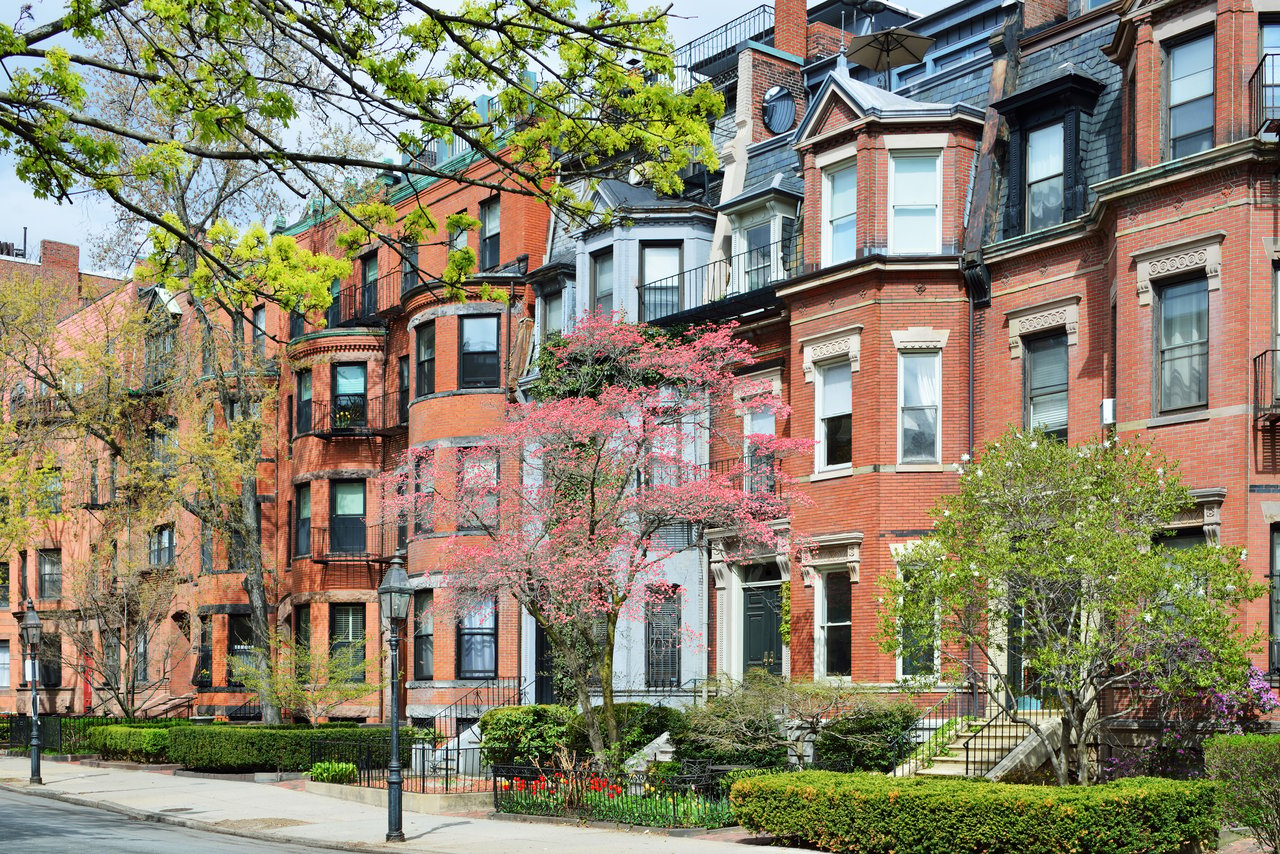
Perched atop one of Boston's oldest hills and crowned by the gleaming gold dome of the Massachusetts State House, Beacon Hill is among the most enchanting and storied neighborhoods in all of America. Gas-lit lanterns flicker along narrow cobblestone streets, brick sidewalks wind past iron-gated gardens, and Federal-style rowhouses — many dating back to the early 1800s — line every block with an elegance that has changed remarkably little over two centuries.
Originally home to Boston's most influential writers, politicians, and civic leaders, Beacon Hill has always attracted those who appreciate the rare combination of beauty, history, and quiet urban sophistication. Today it remains one of Boston's most prestigious and sought-after addresses, drawing professionals, academics, and established families who value its proximity to the Public Garden, Boston Common, and the Charles River Esplanade alongside its remarkable tranquility. With a mix of luxuriously renovated single-family townhouses and historic condominium residences, Beacon Hill offers an irreplaceable piece of American history — and an extraordinarily livable one at that.
Beacon Hill's housing stock is defined by its historic Federal-style brick rowhouses and brownstones, most of which have been converted into luxury condominiums while a smaller number remain single-family townhouses. New construction is virtually nonexistent here due to strict historic preservation laws, which means buyers are choosing from beautifully renovated 19th-century homes that retain their original architectural character.
Beacon Hill is one of the most expensive neighborhoods in Boston, with a median sale price around $1.1 million and average listing prices for larger properties closer to $3 million. Entry-level condominiums may start around $700,000–$800,000, while full-floor or multi-story townhouses can easily exceed $5 million depending on size and position.
Due to the neighborhood's status as a protected historic district, new construction is extremely rare. What buyers will find instead are meticulously renovated historic properties with updated interiors — modern kitchens, smart-home technology, and designer finishes — housed within architecturally preserved exteriors that the city requires to remain unchanged.
Beacon Hill homes are known for their soaring ceilings, wide-plank hardwood floors, ornate crown moldings, marble fireplaces, and in many cases private rear gardens or roof decks with views of Boston Common and the Charles River. The neighborhood's architectural protections mean that even the most updated homes maintain their historic exterior character, including original ironwork and brick facades.
Beacon Hill offers a rare combination of urban convenience and quiet, residential calm, with cobblestone streets that discourage through-traffic and gas-lit lanterns that give the neighborhood an almost storybook quality. It sits directly adjacent to Boston Common, the Public Garden, and the Charles River Esplanade, and is a short walk from the Financial District, Back Bay, and the MBTA, making it one of the most walkable and well-positioned addresses in the city.
Listings can be found through platforms like Redfin, Zillow, and Compass, though inventory in Beacon Hill is characteristically tight and properties move quickly when priced correctly. Given the neighborhood's specialized historic stock and preservation rules, working with an agent who has specific Beacon Hill expertise is particularly valuable.
Buyers should be aware of the neighborhood's strict historic preservation requirements, which limit exterior renovations and can add complexity to permitting processes. Parking is extremely scarce — a notable challenge for car-dependent buyers — and some streets involve steep grades, which is part of the neighborhood's character but worth considering.
Beacon Hill has consistently held its value and appreciated over time due to its limited housing stock, architectural protections that prevent overdevelopment, and enduring desirability among Boston's most affluent buyers. The neighborhood's proximity to major employers in healthcare, finance, and government further supports sustained long-term demand.
While Beacon Hill is not directly on the water, the neighborhood's northern edge borders the Charles River Esplanade, and a number of premium properties on the upper slopes and along Louisburg Square offer sweeping views of the river and the Boston skyline. Properties with these views command significant premiums in the market.
Residents enjoy direct access to Boston Common — the oldest public park in the United States — the adjacent Public Garden with its iconic swan boats, and the Charles River Esplanade for running, cycling, and kayaking. Charles Street serves as the neighborhood's charming main commercial strip, lined with boutique shops, antique stores, wine bars, and highly regarded restaurants, while major cultural institutions, hospitals, and universities are all within easy walking distance.
Beacon Hill is a half-square-mile historic neighborhood perched on a gentle hill at the geographic heart of Boston, bordered by the Boston Common to the south, the Charles River Esplanade to the north, and Downtown Boston to the east. It is home to the Massachusetts State House and represents one of the oldest continuously inhabited neighborhoods in America.
Beacon Hill has a long history of attracting writers, politicians, academics, and civic leaders, and that tradition continues today. The neighborhood draws a mix of established Bostonians, young professionals, and empty nesters who value the rare combination of quiet, close-knit residential life and immediate access to all that the city has to offer.
Beacon Hill's dining scene is intimate and refined, centered primarily along Charles Street and the surrounding blocks. From classic New England comfort food and elegant French-inspired cuisine to wine bars and traditional pubs, the neighborhood offers a distinctive culinary experience that feels authentically local rather than tourist-driven.
Beacon Hill is served by Boston Public Schools as well as several private institutions including the Advent School and Park Street School. The neighborhood's central location puts residents within close reach of some of the country's most prestigious universities, including Harvard, MIT, and Boston University.
Beacon Hill's housing is almost entirely composed of architecturally protected houses dating to the early 1800s, most of which have been converted into luxury condos while maintaining their original character. It is one of the most expensive neighborhoods in Boston, with properties commanding prices that reflect their rarity and setting.
Beacon Hill is exceptionally well connected, with multiple MBTA stops nearby on the Red, Green, and Blue Lines, and walking access to Downtown Boston, Back Bay, and the Financial District. The Charles MGH stop on the Red Line sits directly at the foot of the hill, making transit-dependent living particularly practical here.
Beacon Hill experiences Boston's full four-season New England climate, with warm summers that bring the neighborhood's parks and outdoor spaces to life and snowy winters that make the gas-lit cobblestone streets particularly picturesque. The dense urban setting provides some shelter from wind, and the neighborhood's proximity to the Charles River offers cooling breezes in summer.
Beacon Hill residents enjoy some of Boston's finest urban amenities right at their doorstep, including Boston Common, the Public Garden, the Charles River Esplanade, and the historic Boston Athenaeum — one of the oldest independent libraries in the country. Charles Street's boutique shopping, the Museum of African American History, and a calendar of events round out a remarkably rich residential experience.
Beacon Hill has a resident population of approximately 8,000, with a median age around 35 and an average individual income of roughly $135,000. The community skews toward educated professionals, government workers, and those in healthcare and finance, with a mix of long-time residents and newcomers drawn by the neighborhood's prestige and central location.