

Browse prime Martha's Vineyard, MA homes and real estate options in the area.
Martha's Vineyard Housing Market Trends What is the housing market like in Martha's Vineyard today? In 2025, Martha's Vineyard recorded 297 single-family and multi-family home sales, with the median sale price rising to $1.695 million and average sale prices reaching $2.6 million — reflecting continued strength at the upper end of the market. Homes averaged 168 days on the market, consistent with the island's deliberate and patient buyer pool that values quality and long-term value over speed. Total residential sales volume reached approximately $780 million, underscoring the island's enduring appeal to well-capitalized buyers.
Median Sale Price
# of Homes Sold
Median Days on Market
Your Guide To
New England's most beloved island retreat with a year-round community unlike any other
Sitting just south of Cape Cod in the warm waters of Nantucket Sound, Martha's Vineyard is one of the most naturally beautiful and culturally rich island communities in the world — a place where dramatic Atlantic cliffs, pristine harbors, centuries-old stone walls, and over 124 miles of coastline come together to create a setting that has captivated artists, writers, presidents, and families for generations. With six distinct towns each carrying their own character, the Vineyard is far more than a summer destination — it is a complete and deeply rooted community.
From the preserved whaling captains' mansions and harbor-front boutiques of Edgartown to the colorful Victorian gingerbread cottages of Oak Bluffs, the pastoral farmland of West Tisbury, and the sweeping cliffs of Aquinnah, every corner of the island tells a different chapter of an extraordinary story. The Vineyard's permanent community is deeply invested in protecting the island's natural and architectural heritage — nearly 40% of the land is permanently conserved — ensuring that the quality of life here will endure for generations to come. With a real estate market defined by scarcity, legacy, and long-term appreciation, owning a piece of Martha's Vineyard is as much a statement of values as it is an investment.
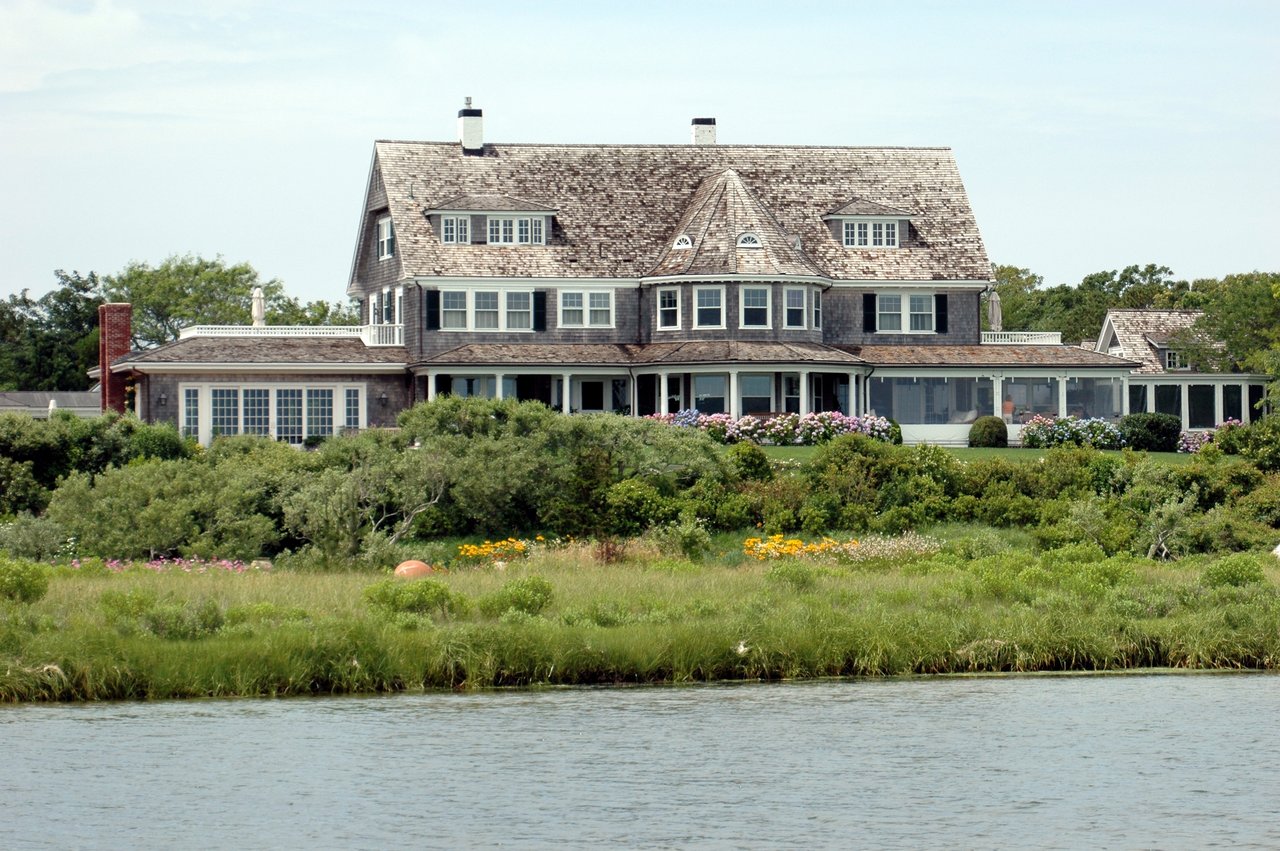
Martha's Vineyard offers an exceptionally diverse range of property types across its six distinct towns, from the stately white-clapboard captain's houses and harborfront estates of Edgartown to the colorful gingerbread cottages of Oak Bluffs, the pastoral farmhouses and wooded retreats of West Tisbury and Chilmark, and the waterfront properties of Vineyard Haven. Land parcels, condominiums, and income-producing multi-family homes round out a market that caters to primary residents, second-home buyers, and legacy estate holders alike.
Martha's Vineyard spans a wide range, with the current median sale price around $1.7 million and average prices exceeding $2.6 million. Entry points exist in the $700,000–$1 million range for smaller or inland properties, while waterfront estates, Chilmark compounds, and premium Edgartown homes regularly trade between $5 million and $20 million or more, with truly exceptional properties reaching well beyond that.
New construction on Martha's Vineyard is limited by strict zoning regulations, environmental review requirements, and a scarcity of buildable lots — factors that have only intensified over time. What new construction does exist tends to be high-end custom builds by respected island builders, and demand for turnkey, newly constructed homes has increased significantly as buyers prioritize energy efficiency, modern systems, and move-in ready condition.
Island properties across the price spectrum commonly feature outdoor living spaces designed to take advantage of the Vineyard's exceptional natural setting — wraparound porches, screened porches, expansive decks, and swimming pools are all common at the mid-to-upper end. Waterfront and water-view properties often include private beach access, deep-water docks, and guest cottages, while inland properties emphasize privacy, acreage, and connection to the island's farmland and conservation landscape.
Martha's Vineyard is one of the most storied and naturally beautiful island communities in the United States, with over 124 miles of coastline, a remarkably preserved architectural and cultural heritage, and a quality of life that is essentially unmatched in the Northeast. The island's strict land conservation policies — with roughly 40% of land permanently protected — ensure that its character and scarcity of buildable land will remain a defining feature for generations.
Active listings are available through island-specific platforms like LINK MV MLS and local brokerages including Tea Lane Associates, Hagerty Real Estate, and Wallace & Co. Sotheby's International Realty. Off-market opportunities are particularly common on the Vineyard, making local agent relationships and island-specific expertise essential tools for serious buyers.
In addition to the standard real estate considerations, island buyers need to factor in the 2% Land Bank fee assessed on most transactions, ferry access and logistics for year-round living, the costs and complexity of island construction and maintenance, flood zone exposure in coastal areas, and the distinction between seasonal and year-round lifestyle implications. Title research can also be more complex given the island's long history of multigenerational family ownership.
Martha's Vineyard has demonstrated a compound annual appreciation rate of approximately 9.3% over the past decade, driven by permanently constrained supply, deep demand from well-capitalized buyers, and the island's status as one of the most coveted lifestyle destinations in the world. The ongoing generational wealth transfer and growing preference for primary or secondary island living among remote-work-enabled buyers support a favorable long-term investment outlook.
The Vineyard offers waterfront options spanning nearly every coastal typology — from the dramatic clay cliffs and Atlantic-facing bluffs of Aquinnah to the calm harbor estates of Edgartown, the Sound-facing homes of Vineyard Haven's West Chop, the private beach access of Chilmark's north shore, and the protected pond and lagoon properties scattered across all six towns. Deep-water dock properties and those with private beach rights are among the most coveted and least frequently traded assets on the island.
Despite its island setting, Martha's Vineyard is remarkably well-amenitized year-round, with excellent dining and shopping in Edgartown, Oak Bluffs, and Vineyard Haven, a well-regarded regional hospital, Martha's Vineyard Regional High School, extensive conservation trails and wildlife sanctuaries, active arts and cultural organizations, and ferry service to Woods Hole providing mainland access. In summer, the island's population swells from roughly 17,000 year-round residents to over 100,000, transforming it into one of the most culturally vibrant destinations in New England.
Martha's Vineyard is an island located off the southwestern tip of Cape Cod in Massachusetts, accessible by ferry from Woods Hole and by air via Martha's Vineyard Airport. The island encompasses six distinct towns — Edgartown, Oak Bluffs, Vineyard Haven, West Tisbury, Chilmark, and Aquinnah — spread across approximately 100 square miles of coastline, farmland, forests, and ponds.
Martha's Vineyard supports a tight-knit year-round community of roughly 17,000 residents that expands dramatically in summer, drawing a diverse mix of longtime island families, seasonal residents, artists, writers, and notable figures from politics, media, and finance. The island has a deeply rooted culture of conservation, community stewardship, and respect for its natural and architectural heritage.
Martha's Vineyard's dining scene is one of the most sophisticated of any island community in the country, with Edgartown in particular hosting an impressive group of restaurants drawing on fresh local seafood, farm-grown produce, and culinary talent that arrives each season. The Vineyard's food culture reflects the island's unique blend of New England tradition and cosmopolitan taste.
Martha's Vineyard is served by the Martha's Vineyard Public Schools district, with Martha's Vineyard Regional High School holding a National Blue Ribbons Schools designation. The island's small scale creates an unusually close-knit educational environment, and the broader Massachusetts educational ecosystem is accessible via ferry for families who choose private schooling on the mainland.
Martha's Vineyard's housing market is one of the most distinctive in New England, ranging from Edgartown's preserved whaling captains' homes and Oak Bluffs' colorful Victorian cottages to Chilmark's sprawling farmhouse compounds and inland estates. The island's strict building regulations and limited supply of buildable land create a market defined by scarcity, legacy ownership, and persistent long-term appreciation.
Access to Martha's Vineyard is primarily via ferry from Woods Hole, with year-round service to Vineyard Haven and Edgartown and seasonal service to Oak Bluffs. Martha's Vineyard Airport offers regional flights connecting the island to Boston, New York, and other Northeast destinations. On-island, residents rely on a mix of personal vehicles, bicycles, the VTA bus system, and — characteristically — golf carts for daily movement.
Martha's Vineyard enjoys a moderating maritime climate thanks to its island position surrounded by the Atlantic Ocean and Nantucket Sound, with milder winters and cooler summers than the mainland. Summers are reliably beautiful with ocean breezes and comfortable temperatures, making the island one of the premier summer destinations in the Northeast, while fall brings a quieter character that many year-round residents consider the best season of all.
Martha's Vineyard offers a remarkable range of amenities, including over 124 miles of coastline with public and private beaches, more than 20,000 acres of permanently protected conservation land, active cultural institutions including the Martha's Vineyard Museum, farmers markets, and town centers in each of the six towns with their own shops, galleries, and restaurants. The island's natural beauty is itself perhaps its greatest amenity.
Martha's Vineyard's year-round population of approximately 17,000 skews older, with a median age around 45 and a community weighted toward established homeowners, many of whom have multi-generational ties to the island. The seasonal population reshapes the island's demographics each summer, bringing a younger and more culturally diverse influx of visitors, while the year-round community maintains the island's strong sense of place.